The Tao (the Way), the natural, underlying principle of the universe
The main belief of Taoism is living in harmony with the Tao (the Way), the natural, underlying principle of the universe, achieved through simplicity, balance (Yin & Yang), and effortless action (Wu Wei), focusing on inner peace and aligning with nature's flow rather than human-made rules or striving for power. Taoists seek to understand and merge with this cosmic force, finding spiritual fulfillment by embracing spontaneity and natural authenticity.Core Concepts:
The Tao (Dao):
The ultimate reality, source, and pattern of the universe, an ineffable, eternal force guiding all things.
Yin and Yang:
The complementary, interdependent forces (dark/light, passive/active) that balance the cosmos, essential for harmony.
Wu Wei (Effortless Action):
Acting spontaneously and naturally, going with the flow of the Tao, like water flowing around obstacles, rather than forcing outcomes.
Chi (Qi):
The vital life energy flowing through everything, which Taoists aim to cultivate for health and well-being.
Simplicity & Nature:
A focus on naturalness, humility, and finding wisdom in the natural world, as seen in the Tao Te Ching.
Goal:
To achieve inner peace, longevity, and unity with the Tao by living a balanced, simple life in tune with the universe, often through practices like meditation, Tai Chi, and Qigong.
"Mastery of the world is achieved by letting things take their natural course. You can not master the world by changing the natural way." (Lao Tzu)
Chad Hansen on The Tao
Chad Hansen: Taoism and the Tao Te Ching - part 1
- The nature of all things knows; identity, purpose, and path. All means all, from the universe to the solar system to the earth and all of nature, which includes all living creatures. A rabbit does not struggle to know what it is and what to do each day. It just follows its nature of being and then doing accordingly. No more fighting or swimming upstream. Way will provide the Way which is different for all things.
- There is a basic goodness deep in the nature of all things. When a person finds him/herself unsettled or off balance or doing things that some may call sin, evil, or desire, then we simply go back to the center where one's nature quiets you. We remember that evil, sin, depravity, desire, hopes, and dreams are all stories we tell ourselves because that's how we have been told to think. But to stop, remember, and become still is like a glass jar of water and dirt. When you shake it up like life does daily with us, we become unclear, unsettled, clowdy. But if we just stop doing and then allow non-doing, the dirt settles and the water becomes clear again. It is just part of the nature of all things.
- Dualistic living is a fiction, stories we tell ourselves about this and that, right and wrong, black and white, soft and hard with language dividing and splitting everything up into bits. This is all based on a story of separation that we have bought into for centuries. But our identity, purpose, meaning, unity, harmony can only be found in the "Wholeness" of all things. We are one with each other, with nature, with the universe, intimately connected with one destiny intertwined.
- That which is Soft overcomes that which is the Hard. Water wears down rocks, destroys roads, and creates great canyons. Wind overcomes cities, buildings, homes, and trees. Gentleness and vulnerability are the greatest strengths.
These 4 Teachings of Daoism Will Help You Navigate Life
Anybody can grasp some of Daosim's key concepts with a few quotes from one of its most important books, the Dao De Jing.
In a modern world that never sleeps, anyone could benefit from the simplicity found in Daoism. This way of thought goes beyond just an esoteric ancient Chinese philosophy, and anybody can grasp some of its key concepts with a few quotes from one of Daoism’s most important books, the Dao De Jing. This wisdom lays a simple framework for achieving harmony, making life a little bit easier.
But first, what is Daoism anyway?
Daoism, sometimes spelled Taoism, comes from Ancient China and the writings of philosophers like Laozi, who lived during the 5th or 4th century BCE. This philosophy, which some consider a religion, teaches how to live in harmony with the world. The word, dao, itself means “the way”, the pattern and substance of everything that exists.
In his most famous collection of teachings, the Dao De Jing, Laozi explains how to act in accordance with the alternating cycles of nature, in other words: a person needs to “go with the flow”. Looking at a few important quotes from the work reveals deep wisdom on how to better navigate life.
1. SIMPLICITY, PATIENCE, COMPASSION
“Simplicity, patience, compassion. These three are your greatest treasures.
Simple in actions and thoughts, you return to the source of being.
Patient with both friends and enemies, you accord with the way things are.
Compassionate toward yourself, you reconcile all beings in the world.”
WHAT DOES IT TEACH: Life can get complicated quite easily, but sometimes all we need to do is get back to the basics. When feeling overwhelmed, these guidelines present essential rules in how to manage actions, relationships, and self-worth in a few, concise sentences.

(GlebSStock / Shutterstock.com)
2. GOING WITH THE FLOW
“When nothing is done, nothing is left undone.”
WHAT DOES IT TEACH: This quote explains the concept of wu wei, uncontrived action or natural non-intervention. In life, rather than fighting against the conditions in our lives, we can allow things to take their natural course. This can also mean that when you don’t know what to do, do nothing. Instead, only jump at opportunities when you feel ready.

(ArchieBee / Shutterstock.com)
3. LETTING GO
“If you realize that all things change, there is nothing you will try to hold on to. If you are not afraid of dying, there is nothing you cannot achieve.”
WHAT DOES IT TEACH: Many Eastern philosophies remind us of the only true constants in life, change and death. While not an easy thing to do, accepting these facts of life can release you from as much suffering and bring freedom in life. We must remember to let go, and allow life to take its course.
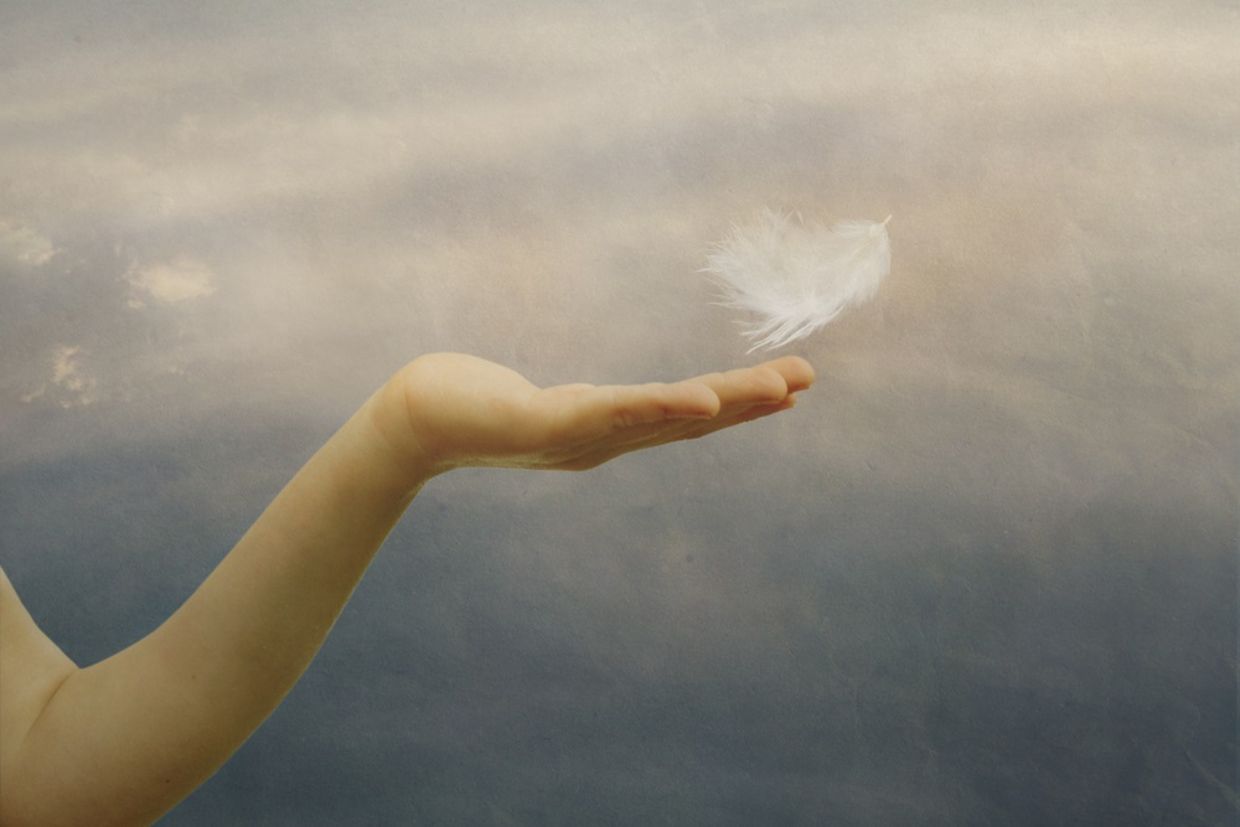
(Viktoriya Pa / Shutterstock.com)
4. HARMONY
“Tao engenders One; One engenders Two; Two engenders Three; Three engenders all things. All things carry the yin (femininity) while embrace the yang (masculinity). Neutralising energy brings them into harmony.”
WHAT DOES IT TEACH: The Chinese concept of yin and yang describes nature in daulities with two opposite, complementary, and interdependent forces. In other words, two halves balancing together that make a whole. Yin and yang always flows and changes with time. One aspect increases as the other decreases, and this balance continues as a pattern in nature. The night becomes the day. The sky meets the earth.
Examining and understanding these patterns in ourselves and around us brings more balance in life. For example, a person that becomes too rigid may break under pressure. Instead, they should become softer and more flexible to restore the balance of yin to yang.

- (Aleksandr Simonov / Shutterstock.com)
Tao: The Art of Effortless Living (Taoist Documentary)
WuWei
Alan Watts: the principle of not forcing or
WuWei


No comments:
Post a Comment