Wednesday, November 18, 2020

Philosophical Suicide

 Laughing in the Face of the Absurdity of Reality

Can I create meaning in the face of absurdity?

Can I make sense out of senselessness?

Can I create order in the face of chaos?


Or will I Elude Reality by Committing Philosophical Suicide?


There are two incontrovertible and yet irreconcilable truths that pursue us for a lifetime.

  1. We as human beings carry primordial questions of yearning inherently throughout life. These are questions that demand and cry out for answers. Is life worth living? Why do so many people suffer? Does life have any intrinsic meaning or purpose? Why hasn’t it revealed itself?

  2. In response, the universe stands in silent indifference. In my own search for answers coming from a Christian perspective all my life, I realized that my god of love based on relationships has two persistent and predictable responses to me and to my questions; 1) silence and 2) invisibility, leaving me standing here with tears and glazed eyes staring into the abyss.


“I don’t know whether this world has a meaning that transcends it. But I know that I do not know that meaning and that it is impossible for me just now to know it. What can a meaning outside my condition mean to me? I can understand only in human terms.” “Life has no inherent meaning and hence is absurd.” (Albert Camus, The Myth of Sisyphus)


But Camus concludes that even though life has no inherent meaning, it does have great inherent value for each of us. But must revolt against the absurdity and make life's values our own.

"We must live to the point of tears."

https://murphydp.wordpress.com/2013/11/15/camus-at-100-live-to-the-point-of-tears/?blogsub=confirmed#subscribe-blog


“A myth is a way of making sense in a senseless world. Myths are narrative patterns that give significance to our existence.” (Rollo May)


And yet a myth is just a story upon which we base civilizations, societies, governments, and religions.


It is no wonder that Voltaire says, "God is a comedian playing to an audience too afraid to laugh."


Of all creatures, human beings are the ones that can create our own world, our own version of reality, and then live by it. This is what culture is. The fact that we have been able to organize ourselves to create so many things, both materially and intellectually, has projected us to the top of the food chain and given us control over this world even though there are many other creatures that are more powerful than us.


This intellectual and philosophical ability has given us a view of reality that has become more and more clear through science and research. But this is also a two-fold dilemma that includes both the problem (whether seen accurately or not) and the solution (whether it is real or not). One that shows us the human dilemma that we find ourselves in and one that gives us the ability to do something about it in so many ways.


  1. DEATH. The human dilemma is that we can honestly look at the predicament we are in. Or we can choose a world and life view that fits what we want to believe, truth be damned.

“This is the terror: to have emerged from nothing, to have a name, consciousness of self, deep inner feelings, an excruciating inner yearning for life and self-expression - and with all this yet to die” (Ernest Becker, The Denial of Death).

"Perhaps the whole root of our trouble, the human trouble, is that we will sacrifice all the beauty of our lives, will imprison ourselves in totems, taboos, crosses, blood sacrifices, steeples, mosques, races, armies, flags, nations, in order to deny the fact of death, the only fact we have. It seems to me that one ought to rejoice in the fact of death--ought to decide, indeed, to earn one's death by confronting with passion the conundrum of life."
(James Baldwin)

This is the reality that we cannot deny. It is about as accurate and honest and raw as we can get. But this gives us such existential angst that it is almost impossible to live in the face of death without working some existential magic, a human construct to believe in. This is our concrete dilemma. We know that none of us gets out of this thing alive. But there is also the abstract dilemma of creating meaning in the face of impending death. 


  1. MEANING. And as we consider our demise, we realize we cannot live life this way without creating some sort of meaning and purpose in spite of death knocking at our door every minute of every day throughout a lifetime. And that brings us to our ability to create meaning out of virtually nothing. We are story-telling beasts and we use this ability to give meaning and purpose, destruction and war. We create or adopt stories in our heads, myths, that give us a grounding upon which to build our lives. In the story we choose our truth, our reality. We often call this story adoption our foundation upon which we build our house on rock or solid ground rather than sand or shifting, unstable ground. Meaning can only come from the stories we are told and then, in turn, we tell ourselves, and choose to believe. Each day of our lives the religions of the world and life itself demands that we choose the meaning and purpose that will direct our lives and give meaning to our death.

    1. Like a moth to the flame, we must choose how close to reality our stories come. We can create meaning from a story that is not true at all but is a story that has been handed down through generations without any verification and any concrete connection to reality. These stories are our buffer keeping us from being burned by the raw reality of life, which is death.

    2. Or we can create meaning from a story that is as close to reality as we can get without getting mortally burned. This is the nature of the human condition, the nature of the myth, and the nature of language and thought. Can we face the reality of the absurdity of life, or must we mediate reality with make-believe human constructs... stories in the head?


My raison d’etre and my reason for writing are to live as close to the flame of reality as I can and yet stay alive. This I must do. This is something that I cannot not do. In this blog post, I am exploring for my own understanding and meaning the philosophy of The Absurd, which seems to me to be as close to reality as I can get (so far at least). 


In my experience, I’ve gradually come closer to understanding reality as it is and at the same time I’ve gradually unearthed a multitude of myths that I have been clinging to. Most of them are abstract, based on a divine response of invisibility and silence, or simply not verifiable because of the nature of time, language, and thought. As I have spent hours, days, and years of my life examining each of these stories that at times have been life-giving, I’ve found that I have to make a choice that I have resisted for a very long time. Even though these stories are each coming up empty, I knew that I wanted them and needed them to be true ever since I can remember. But the cognitive dissonance has been growing, at times exponentially, to the point where something has to break. Either I let go of some dogma that has been propping up my stories and myths or I hang on for dear life, convincing myself that I cannot survive without my pet micro and macro narratives that I considered foundational for me. But what I have found is that along with this cognitive dissonance (see endnotes) came an existential crisis (see endnotes) that I could no longer tolerate and live with. Integrity, honesty, and authenticity are far too important to me. I finally was able to let go, one by one, and face life head on. No buffers or cushions or helmets. Just straight up “Life as it is”. I was finally able to ask, “What’s up doc?” and tell myself, “Give it to me straight, doc.” No more candy-coated answers or rose colored glasses. “Serve it to me neat.” I had to conclude that I can no longer in good conscience commit to any religions or systematic theologies because they are nothing more than human constructs that keep changing with the human condition over centuries. They are other people’s stories and answers, not mine. I became tired of being a second hand person. (see below)


I could no longer continue through life pretending to believe the stories. First, the concept that death is not just a speed bump on the way to heaven somewhere, but that death is a dead end that I would not survive; that I could not circumvent, and beyond which I could not know. And then I had to tackle all of the terror management techniques and tactics I had been using on the life/death problem and ultimately on myself for so long.


The Danish philosopher Kierkegaard longed for a life that we could live for and die for. But since he could not find that inherent in life, then we must turn to systems of faith and religion in order to adopt something that offers meaning in life, whether or not it is true. In other words, religion is an external way of imposing meaning and purpose on life. 


It works simply because we choose to believe it. 

It works by creating reality in our head.

It works by taking a leap of faith.

It is magical thinking that tricks us into believing.

But religion is no more than a story in my head.

And some people are ok with that.

For some people, this is all they need to end their existential angst.


I think that an aspect of The Absurd is that the final question we must ask ourselves is “Can I live with my adopted story?” Will I live with it or must I die? We must face the reality that the only thing we have that saves us from death is life itself which is temporary, sort of an ultimate paradox.


BUT… Camus says that this is nothing more than philosophical suicide.

We can choose death through suicide or we can choose to live while dead by giving in to the tyranny of an external belief, hence choosing philosophical suicide. 

Reason has its limits and that which is beyond our understanding is inscrutable. 

Even if the universe had some sort of meaning that goes beyond it, 

we simply don’t know and can’t know it. And the universe is not capable of revealing it to mankind at this time.


I don’t want to fool myself anymore. The only honest conclusion we can make about the universe is that it is meaningless, there are no universal values, there is no divine plan, there is no divine, everything happens randomly; as far as we can know and see. None of this is implicit in this universe and therefore cannot be explicitly revealed. Or if not randomly, then it is there for itself. The universe has just the right amount of order and intelligence (an inner knowing) to sustain itself but not enough to sustain my need to know what it is all about. In other words, the universe is self-centered, not human-centered; which is in diametric opposition to what religions would like us to believe by speaking for the universe.


The universe’s response to the human cry for meaning is silence. This is what Camus would call The Absurd. We keep trying to make something more out of this universe, to remake it according to our image and our desires, but as we think we grasp it, it slips through our fingers. We keep doing this because we want to be more than we are. That’s why we create gods; to extend human significance and existence into eternity, even though we have no evidence. Except that the gods said so, which we don’t have evidence of either.


What is our response to living life on a human rat wheel, constantly exhausting ourselves while going nowhere? Do we give up in despair? Or do we arise in insurgency against the power of death and The Absurd over us? Not at all like we were told all of our lives, “Death has been conquered” by our preferred religious system and savior, and yet I die. This is simply another story without evidence; magical thinking and trickery. Rather how can I face death and The Absurd in every moment of every day and stand firm while creating meaning here and now?   

Trying to find answers to these questions in an irrational and silent world is absurd.

But the question can’t be negated. And we are left responsible for our own meaning and purpose.


So we keep trying: religion, social systems like Naziism and a master race like white supremacy, or karma. Controlling things or people. Buying things or people, cars or houses. Accumulation of commodities or money, education or knowledge. A spouse, family, and kids can be used to distract us from the inevitability of death and The Absurd. The most common way of committing philosophical suicide is through elusion. Elusion via Illusion. Career and advancement; climbing the corporate ladder. Collector of beautiful or unique things. Sports and all kinds of entertainment. And yet, at death, what are we grateful for? For me, it is living without appeal in fearlessness, gentleness, compassion, and empathy, as I make a difference in the lives of all those I encounter.


Philosophical or Figurative Suicide can be unconscious or “tacit and without awareness or attention.” Here are some very good examples that took years for me to become aware of. Gradually, I have been rooting out these deeply held habitual practices and beliefs.

Philosophical Suicide: Being a Second Hand Person

by allowing Cultural Conditioning to control us as we become automatons; a form of brainwashing unawares.

“In this constant battle which we call living, we try to set a code of conduct according to the society in which we are brought up, whether it be a Communist society or a so-called free society; we accept a standard of behaviour as part of our tradition as Hindus or Muslims or Christians or whatever we happen to be. We look to someone to tell us what is right or wrong behaviour, what is right or wrong thought, and in following this pattern our conduct and our thinking becomes mechanical, our responses automatic. We can observe this very easily in ourselves.” 


“For centuries we have been spoon-fed by our teachers, by our authorities, by our books, our saints. We say, 'Tell me all about it - what lies beyond the hills and the mountains and the earth?' and we are satisfied with their descriptions, which means that we live on words and our life is shallow and empty. We are secondhand people. We have lived on what we have been told, either guided by our inclinations, our tendencies, or compelled to accept by circumstances and environment. We are the result of all kinds of influences and there is nothing new in us, nothing that we have discovered for ourselves; nothing original, pristine, clear.” (Krishnamurti, Freedom from the Known)


Our cultural conditioning (religion, politics, values, beliefs, etc) can often be quickly ascertained by our zipcode. We become second hand humans without even realizing it. This is a form of philosophical, figurative suicide.

Philosophical Suicide: rationalizing things as Absolute Necessity

Bohm is a renowned physicist that spent much of his later days researching and exploring thought, dialogue, and language using the scientific method along with dialoguing with some of the greatest minds of that time, Albert Einstein and Krishnamurti and many others. In his book, Thought as a System, he explores the way thought often has a mind of its own, running rampant through your tulip garden of the mind and all over your quiet or peace or sleep. It literally takes a collective voice of its own in dialogue also, which makes it a powerful tool for bringing people together to solve some of the world’s great problems using the collective thought of the group. Below is a very basic idea that is often “tacit and without awareness or attention.” One of the ways to unravel the knots that thought leaves us in is to start observing the knots and seeing what caused them. The concept of “absolute necessity” is a mental defense mechanism, a way for thought to protect its own ideas from being challenged or questioned, sort of a survival or sustainability skill. It is as if this is a defense mechanism of thought itself, outside of the person’s will or awareness or consciousness.

“When a given principle is regarded as universally valid, it means that it is taken as absolutely necessary. In other words, things cannot be otherwise, under any circumstances whatsoever. Absolute necessity means ‘never to yield.’ To have something in the generative order that can never give way, no matter what happens, is to put an absolute restriction of free play of mind, and thus, to introduce a corresponding block to creativity that is very difficult to move.”

“Over a limited period of time, certain values, assumptions, and principles may usefully be regarded as necessary. They are relatively constant, although they should always be open to change when evidence for the necessity of the latter is perceived. The major problem arises, however, when it is assumed, usually tacitly and without awareness and attention, that these values, assumptions, and principles have to be absolutely fixed, because they are taken as necessary for the survival and health of the society and for all that its members hold to be dear.” (David Bohm and David Peat, “Science, Order, and Creativity,” pp. 238-239)

The thing that Bohm says is that it is important for us to observe our own thinking processes, he calls it proprioception of thought. Just like in the body proprioception is used for balance, coordination, and sensing where it is in space and time, so we need a practice and process so that we can learn to observe our own thought. So often, it is doing what it is meant for, like solving problems, but often it also hijacks us. Meditation, done in certain ways, can help with this.

Philosophical Suicide: A Fascism of the Heart and Mind

“I also failed to learn that I have within myself a certain ‘fascism of the heart.’ When the difference between you and me gets too great, when your version of what is good or true or beautiful becomes too threatening to mine, I will find some way to kill you. I won’t do it with a bullet or a gas chamber. But I will do it with a label, a dismissive name, any way of rendering you irrelevant to my life in order to reduce the tension between your view of reality and mine.” http://www.aps.org/publications/apsnews/200707/backpage.cfm


Above, Parker Palmer describes a fascism of the heart and describes this much better than I could. If we take this description and apply it to aspects of life as a parallel to philosophical suicide. I’ll list the ones that come to mind without going into each one. It doesn’t take much processing to see how the following fall into this trap of this tyranny of thought.


Politics: Nationalism, Fascism, Tyranny, Totalitarianism, Dictatorship, Authoritarianism

Religion: Fundamentalism, Evangelicalism, Shiree law, Christian nationalism

Social Interaction: bullying, domination / oppression,  superiority, being right


So is suicide the only rational response to absurdity?


If we face life honestly, we can let go of all illusions and live each moment, creating our own meaning from our experiences.


Even though we know that life is absurd, we should not accept it. We should revolt against it. The only way to be free in a context of unfreedom is rebellion using the power that we have; thought and action. 


The only way to deal with an unfree world is to become so absolutely free that your very existence is an act of rebellion.” (Albert Camus)


"For those who believe in God, most of the big questions are answered. But for those of us who can't readily accept the God formula, the big answers don't remain stone-written. We adjust to new conditions and discoveries. We are pliable. Love need not be a command or faith a dictum. I am my own God. We are here to unlearn the teachings of the church, state, and our educational system. We are here to drink beer. We are here to kill war. We are here to laugh at the odds and live our lives so well that Death will tremble to take us." (Charles Bukowski)

The absurd hero lives life to the fullest in the face of life’s absurdity.


“Hence what he demands of himself is to live solely with what he knows, to accommodate himself to what is, and to bring in nothing that is not certain. He is told that nothing is. But this at least is a certainty. And it is with this that he is concerned: he wants to find out if it is possible to live without appeal.”

(Albert Camus, The Myth of Sisyphus)


Living without appeal.


Myth of Sisyphus. Pushing that rock up the hill is so meaningless and absurd that supposedly there is no creating meaning. But that is the key to living without appeal. It is not necessary that our actions lead to something later. The meaning lies in the act itself moment by moment. This is sufficient to be content in a hopeless life. We can think that there is nothing more futile than pushing a rock up a hill. But what if we can learn to see it differently, The gods based their punishment on the belief that there is nothing more futile than endless labor. But what if Sisyphus decides to find happiness in this endless exercise? What if he refuses to bow before such despair? Because is there anything more rebellious than actually finding joy in what is supposed to be our endless punishment.


“When the throne of God is overturned, the rebel realizes that it is now his own responsibility to create the justice, the order, and the unity that he sought in vain within his own condition, and in this way to justify the fall of God. Then begins the desperate effort to create, at the price of crime and murder if necessary, the dominion of man” (The Rebel, Albert Camus, p 25)


Despite his intentions, Camus cannot avoid asserting what he believes to be an objective truth: “We must despair of ever reconstructing the familiar, calm surface which would give us peace of heart” (MS, 18). Turning to experiences that are seemingly obvious to large numbers of people who share the absurd sensibility, he declares sweepingly: “This world in itself is not reasonable, that is all that can be said” (MS, 21). Our efforts to know are driven by a nostalgia for unity, and there is an inescapable “hiatus between what we fancy we know and what we really know” (Myth of Sisyphus, p 18).


As Camus now presents his own version of the experience, “the stage sets collapse. Rising, streetcar, four hours in the office or the factory, meal, streetcar, four hours of work, meal, sleep, and Monday Tuesday Wednesday Thursday Friday Saturday and Sunday according to the same rhythm …” (MS, 12–3). As this continues, one slowly becomes fully conscious and senses the absurd.


Here Camus pits himself against science and philosophy, dismissing the claims of all forms of rational analysis: “That universal reason, practical or ethical, that determinism, those categories that explain everything are enough to make a decent man laugh” (MS, 21).


For the Camus of The Myth of Sisyphus, however, “Should I kill myself?” is the essential philosophical question. For him, it seems clear that the primary result of philosophy is action, not comprehension. His concern about “the most urgent of questions” is less a theoretical one than it is the life-and-death problem of whether and how to live.


As he says in The Rebel, “the absurd is an experience that must be lived through …”


But he rejects what he sees as their ultimate escapism and irrationality, claiming that “they deify what crushes them and find reason to hope in what impoverishes them. That forced hope is religious in all of them” (MS, 24).


Camus, on the contrary, builds an entire worldview on his central assumption that absurdity is an unsurpassable relationship between humans and their world (Aronson 2013). He postulates an inevitable divorce between human consciousness, with its “wild longing for clarity” (MS, 21) and the “unreasonable silence of the world” (MS, 28). 


After the rock comes tumbling down, confirming the ultimate futility of his project, Sisyphus trudges after it once again. This “is the hour of consciousness. At each of those moments when he leaves the heights and gradually sinks towards the lairs of the gods, he is superior to his fate. He is stronger than his rock” (MS, 121). Why use the words “superior” and “stronger” when he has no hope of succeeding the next time? Paradoxically, it is because a sense of tragedy “crowns his victory.” “Sisyphus, proletarian of the gods, powerless and rebellious, knows the whole extent of his wretched condition: it is what he thinks of during his descent” (MS, 121). Tragic consciousness is the conclusion of “absurd reasoning”: living fully aware of the bitterness of our being and consciously facing our fate.

Living without Excuse or Blame


Living without appeal is living without excuse or blame, without illusion or pretense; taking total responsibility for our one amazing life. No one to bail us out. No one to save us. No one to tell us what to think, what to do, what to believe. No one else’s agenda or meaning or purpose.

What then is Camus’s reply to his question about whether or not to commit suicide? Full consciousness, avoiding false solutions such as religion, refusing to submit, and carrying on with vitality and intensity: these are Camus’s answers. This is how a life without ultimate meaning can be made worth living. As he said in Nuptials, life’s pleasures are inseparable from a keen awareness of these limits. Sisyphus accepts and embraces living with death without the possibility of appealing to God. “All Sisyphus’s silent joy is contained therein. His fate belongs to him. His rock is his thing” (MS, 123).

Lucidly living the human condition, Sisyphus “knows himself to be the master of his days.By becoming conscious of it, Camus is saying, he takes ownership of it. In this sense, Sisyphus reshapes his fate into a condition of “wholly human origin.” “Wholly” may be an exaggeration, because after all, death is “inevitable and despicable,” but by acknowledging this, Sisyphus consciously lives out what has been imposed on him, thus making it into his own end. 

The Myth of Sisyphus is far from having a skeptical conclusion. In response to the lure of suicide, Camus counsels an intensely conscious and active non-resolution. Rejecting any hope of resolving the strain is also to reject despair. Indeed, it is possible, within and against these limits, to speak of happiness. “Happiness and the absurd are two sons of the same earth. They are inseparable” (MS, 122). It is not that discovering the absurd leads necessarily to happiness, but rather that acknowledging the absurd means also accepting human frailty, an awareness of our limitations, and the fact that we cannot help wishing to go beyond what is possible. These are all tokens of being fully alive. 

“The struggle itself toward the heights is enough to fill a man’s heart.” (MS, 123).

The Absurd: Its Unique Beauty and Its Total Freedom

At first, I believed that The Absurd is a total loss of control; another form of oppression that inevitably causes depression. But I find that instead it is very freeing and empowering, and has become primarily a source of joy. Despair is when we are oppressed and depressed and so feel trapped with no way out. But Camus leaves a very clear and inevitable way out to the hero of The Absurd. We laugh in the face of The Absurd knowing it has no dominion over us. Death comes and death goes; all a part of the circle of life. What I find most freeing is that I no longer have to follow some external meaning and purpose for someone else from someone else. What I must be and become is something so utterly original that no other can follow. The mold has been used and then broken leaving each and every other person to begin again in their totally unique way. What beauty. What creativity. What diversity. So many paths possible and yet simply one chosen by this solitary man in this unique time for a purpose that no one else can even imagine.

This exploration of raw truth leaves me exactly where I already was but with more strength and clarity. I’ve known for the past 10 years that meaning and purpose and all truth do not and cannot come from an external source. It cannot be secondhand. For each of us, it must be original. It must originate internally. Otherwise, I am a copy. Otherwise, I have abnegated my life to another. Otherwise, my life is not mine.

“Tell me, what is it you plan to do with your one wild and precious life?” (Mary Oliver)


The meaning and purpose of dancing is the dance

The meaning and purpose of living is to live

Let’s not miss the point…


“When … you realize that you live in, that indeed you are this moment now, and no other, that apart from this there is no past and no future, you must relax and taste to the full, whether it be pleasure or pain. At once it becomes obvious why this universe exists, why conscious beings have been produced, why sensitive organs, why space, time, and change. The whole problem of justifying nature, of trying to make life mean something in terms of its future, disappears utterly. Obviously, it all exists for this moment. It is a dance, and when you are dancing you are not intent on getting somewhere… The meaning and purpose of dancing is the dance.” (Alan Watts, from ‘The Wisdom of Insecurity’)


Life is a Dance

https://youtu.be/29atSZKbmS4 


Suicide Poem: a powerful statement of revolt against life and its absurdity. 

"It will NOT be this day!" https://fb.watch/2jI9_aJ6hD/
  

Do not go gentle into that good night


Dylan Thomas - 1914-1953


Do not go gentle into that good night,

Old age should burn and rave at close of day;

Rage, rage against the dying of the light.


Though wise men at their end know dark is right,

Because their words had forked no lightning they

Do not go gentle into that good night.


Good men, the last wave by, crying how bright

Their frail deeds might have danced in a green bay,

Rage, rage against the dying of the light.


Wild men who caught and sang the sun in flight,

And learn, too late, they grieved it on its way,

Do not go gentle into that good night.


Grave men, near death, who see with blinding sight

Blind eyes could blaze like meteors and be gay,

Rage, rage against the dying of the light.


And you, my father, there on the sad height,

Curse, bless, me now with your fierce tears, I pray.

Do not go gentle into that good night.

Rage, rage against the dying of the light.

https://plato.stanford.edu/entries/camus/#toc 

https://plato.stanford.edu/entries/camus/#LimRea 

https://plato.stanford.edu/entries/camus/#CamWorVio 


https://ronirvine.wordpress.com/2011/08/17/what-is-meaning/ 


https://ronirvine.wordpress.com/2008/11/19/the-search-for-meaning/ 


-Dionysius Areopagita (Syrian Christian theologian and Neoplatonic philosopher late 5th to early 6th century) - The Theologia Mystica - THE MYSTICAL THEOLOGY


In order to achieve oneness with the divine, one must give up every conception of god. Apophatic Theology. One must give up every conception of god whatever. Then he enumerates:  Don’t think that god is oneness or threeness or unity or spirit or any kind of anything that the human mind can conceive. God is beyond all of that. All theologians after Dionysius in the 6th century said that the highest way of understanding god is in negative terms. Not in positive terms of what god is or what god is like but in terms of what god is not and cannot be. Because all of those terms can be contained within our minds where god cannot be contained. If there is a god, he is beyond all of that. And, if there is a god, he is not a he. This we do know.


We must cease to cling to any ideation, concept, or image of god. The easy way is to cling to concepts and images that one likes and that one has been told. This is another form of philosophical suicide. Giving up the spiritual discipline of removing all images. This is very hard work. Ideation, concepts, and images are all forms of thought and thought is made up of words. So there are no words or thoughts that can contain what is and what is beyond human understanding. We can understand only what we can see and touch and explore and interact with. So we create images of god to interact with. Playthings of the mind. Stories in the head. We do this through magical thinking like with a childhood imaginary friend. This is nothingness, emptiness, and anytime we cheat in our understanding of what is (I Am what I Am) is a form of philosophical suicide. So anytime we speak of god in ordinary, everyday terms, this is when we take that which is sacred and make it profane by use of graven images.


Graven: fix (something) indelibly in the mind.

"the times are graven on my memory"

Image: a mental representation or idea.

a representation of the external form of a person or thing

(Oxford Dictionary)


When a sculptor makes a figure, he does it entirely by removing stone, taking something away, so in the same way, St. Aquinas says that because of god’s infinity exceeds everything that the human mind can reach, the best way to speak of god is by remotion, which is to say, by removing from our view of god every inadequate concept. This is what the Hindu people refer to with Neti Neti.


Neti Neti (Sanskrit : नेति नेति) is a Sanskrit expression which means "not this, not that", or "neither this, nor that" (neti is sandhi from na iti "not so"). It is found in the Upanishads and the Avadhuta Gita and constitutes an analytical meditation helping a person to understand the nature of the Atman (Self or soul) by negating everything that is not Atman. One of the key elements of Jnana Yoga practice is often a "neti neti search." The purpose of the exercise is to negate all objects of consciousness, including thoughts and the mind, and to realize the non-dual awareness of reality.

“If nothing that can be seen can either be God or represent Him to us as He is, then to find God we must pass beyond everything that can be seen and enter into darkness. Since nothing that can be heard is God, to find Him we must enter into silence. Since God cannot be imagined, anything our imagination tells us about Him is ultimately a lie and therefore we cannot know Him as He really is unless we pass beyond everything that can be imagined and enter into an obscurity without images and without the likeness of any created thing.” (Thomas Merton)

EndNotes

Existential Crisis, also known as existential dread, are moments when individuals question whether their lives have meaning, purpose, or value, and are negatively impacted by the contemplation. It may be commonly, but not necessarily, tied to depression or inevitably negative speculations on purpose in life. Wikipedia


Cognitive Dissonance: The theory of cognitive dissonance proposes that people are averse to inconsistencies within their own minds. It offers one explanation for why people sometimes make an effort to adjust their thinking when their own thoughts, words, or behaviors seem to clash with each other.

When one learns new information that challenges a deeply held belief, for example, or acts in a way that seems to undercut a favorable self-image, that person may feel motivated to somehow resolve the negative feeling that results—to restore cognitive consonance. Though a person may not always resolve cognitive dissonance, the response to it may range from ignoring the source of it to changing one’s beliefs or behavior to eliminate the conflict.


Bedrock of Being

 Bedrock: what’s left at the bottom?

What’s left when life’s dross is burnt off?

What’s left when the non-essentials are stripped away?

What happens when simplicity goes all the way down; leaving nothing but the essentials.

Once I go all the way down, what are the bare necessities; the essence of existence?

There seems to be a cultural prejudice against “down”

But when all of our striving is upward, we lose our essence, our source, our Ground of Being.

And it is only from a downward position that I can “occupy my life to the edges.”

"Superficiality is the curse of our age. The doctrine of instant satisfaction is a primary spiritual problem. The desperate need today is not for a greater number of intelligent people, or gifted people, but for deep people." (Richard Foster, Celebration of Discipline)


For me, when I began blogging 15 years ago, little did I know that I had begun such a journey, that it had become the beginning of my unraveling, unlearning, uprooting of everything that I thought was tested and true; the ending of life as I knew it. Today, as it continues, I had no idea how far it would go.


But I’m still committed to follow the truth, no matter where it leads. 


I am left with a profound groundlessness that I am still getting used to; 

a groundlessness that is not rooted in other people’s stories of the past, 

a groundlessness that is not rooted in other people’s graven mental constructs and images of god, 

a groundlessness that is real and not conjured up for the sake of comfort, security, and certainty, 

a groundlessness that is now my "ground of being" that has set me free... to be and to live in a reality consisting only of "what is".


Wednesday, October 21, 2020

Learning to See

 From seeing to Seeing

Developing the Depth and Clarity of Perception.

Our perspective and perception creates and changes our world.

“The real voyage of discovery consists not in seeing new landscapes, but in having new eyes.” (Marcel Proust).


“If one wants to see a thing very clearly, one’s mind must be very quiet, without all the prejudices, the chattering, the dialogue, the images, the pictures – all that must be put aside to look.” (Krishnamurti)


Living with Open Hands as an expression of an Open Mind, Open Heart, and Open Will inevitably leads to learning to See and Hear with the heart past the surface level facade to the heart behind the facade, behind the words and actions of individuals and systems. This gives us a Way to See more clearly, more inclusively, more whole-istically, more deeply, more insightfully, and more extensively.


For me, this growth process has helped me express a paradigm shift that has affected my whole life for most of my life: 

From seeing with my eyes to Seeing with my heart to Seeing with the eyes of the brokenhearted; Seeing life from the bottom, from the edges, from the margins. (for more, check out my late blog post)


As I write, I’ve been contemplating a concept that has taken root a number of years ago. I have noticed in myself that there are different levels of seeing. So several years ago, I started using two written versions of  the word: seeing and Seeing.


There is seeing with the eyes or Seeing with the heart.


We can hear with the ears or Hear (Listen) with the heart.


When we listen to a person speak, no matter what they say, do we listen to the heart behind the words?

When we hear a song, whether we like it or not, do we listen to the creative expression, the heart behind the music?

When we look at a painting or a sculpture, do we look at it and through it to the heart of the artist?

When we hear a poem, do we listen for the heart that created it?

When we dialogue with someone of differing beliefs and values, do we look to the heart behind those beliefs and values?

“It is the ability to see beauty in all of life’s circumstances that gives our lives meaning.” (Victor Frankl)

In his book, “Man’s Search for Meaning”, Victor Frankl describes a bowl of filthy water with a fish head floating in it, given to him by his Nazi captors in a concentration camp during WWII. He trained himself to see beauty in this meal, rather than focus on the horror of it. He attributed his ability to see beauty anywhere as a vital factor in surviving those horrific camps. He reminds us that if we focus on what’s ugly, we attract more ugliness into our thoughts, and then into our emotions, and ultimately into our lives. By choosing to hang on to one’s corner of freedom even in the worst situations, we can process our world with the energy of appreciation and beauty, and create an opportunity to transcend our circumstances.

~~~~~~~~~~~

First we must look intently

with all of our heart,

with a pure heart

(free of bias and judgment).

Then and only then will we begin to See.

Wayne Dyer, The Power of Intention, p. 28

~~~~~~~~~~~


“Little round planet

In a big universe


Sometimes it looks blessed

Sometimes it looks cursed


Depends on what you look at obviously

But even more it depends on the way that you see” 


(Bruce Cockburn, Child of the Wind)


I have noticed in myself that I have ways of seeing that are different at different times. Am I seeing with the eyes or Seeing with the heart? May I not waltz through life without “Seeing”.


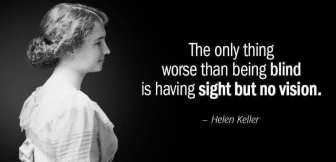
sight-novision“As a blind man, I think that I see a lot better than I did when I was sighted because I don’t really think we see with our eyes. I think we live in darkness when we don’t look at what’s real about ourselves, about others, or about life. No operation can do that. When you see what’s real about yourself, you see a lot. And you don’t need eyes for that.” (At First Sight 1999 Val Kilmer)

“I am learning to see. I don’t know why it is, but everything enters me more deeply and doesn’t stop where it once used to. I have an interior that I never knew of. Everything passes into it now. I don’t know what happens there.” (Rainer Maria Rilke, from “The Notebooks of Malte Laurids Brigge,” 1910)


https://ronirvine.wordpress.com/seeing/


https://ronirvine.wordpress.com/2013/06/06/seeing-with-the-heart/ 


https://ronirvine.wordpress.com/2008/12/28/seeing-beauty/ 


Seeing with the Heart 

Living life with open hands is an outward expression

of the inner work

of opening the heart, mind, and will.

This opening up requires open eyes and open ears

that see and hear with the heart

. . . a “Seeing” (and “Hearing”) that goes beneath the surface of

actions, reactions, and interactions,

habits and conditioned responses,

mental models and assumptions,

. . . to the heart below the surface.

With this openness, we “See”

with new eyes at a deeper level

into ourselves, other people, organizations,

communities, and systems.

This inner work is then expressed outwardly

by living with open hands;

welcoming others and life,

giving and receiving openly,

living in community.

Living with open hands

is not a series of notions

nor is it a system of belief.

It is a way …

expressing oneself in action.

It is a way …

a spiritual discipline that can deepen the spiritual life

It is a way …

expressing oneself clearly and visibly in

integrity, equality, simplicity, community, and peace.


See or Perish

“One could say that the whole of life lies in seeing — if not ultimately, at least essentially. To be more is to be more united — and this sums up and is the very conclusion of the work to follow. But unity grows, and we will affirm this again, only if it is supported by an increase of consciousness, of vision. That is probably why the history of the living world can be reduced to the elaboration of ever more perfect eyes at the heart of a cosmos where it is always possible to discern more. Are not the perfection of an animal and the supremacy of the thinking being measured by the penetration and power of synthesis of their glance? To try to see more and to see better is not, therefore, just a fantasy, curiosity, or a luxury. See or perish. This is the situation imposed on every element of the universe by the mysterious gift of existence. And thus, to a higher degree, this is the human condition.” (Pierre Teilhard de Chardin)


A Hasidic Tale

A rabbi asked his disciples, "When is the hour that day comes? What is that moment when night becomes day?" One disciple said, "When one can tell an ox from a donkey?" Another said, "When one can tell an olive tree from a grape vine?" The rabbi said, "It is when you can look in the face the 'other' and see your brother or your sister. Until then we continue in darkness."


Monday, October 5, 2020

Truth or Lies ... YOU choose

Truth or Lies, Life or Death

There are Two Ways Before Each One of Us

A Good Citizen will Learn to STOP AND THINK

For the Sake and Survival of our Democracy

Are you using due diligence 

to investigate all of the information that you share?


YOU ARE PROBABLY SPREADING MISINFORMATION. HERE'S HOW TO STOP.

It is our duty as citizens and good human beings to stop the spread of misinformation. Here are a few of my thoughts and the links below carry it further. 

1. It is a good citizen's job to stop the spread of lies and misinformation

2. It is not our job to be a spreader of everything you like or react to. This
gives me an image of a manure spreader on a farm. Not our job. 
Stop spreading the stench of lies.


3. It is our job to use due diligence and INVESTIGATE each and every article or other meme that makes us feel good before sharing anything. Remember, propaganda is created to evoke an emotional reaction (fear, hate, rage, etc) in you and therefore makes you want to spread it, while screaming, "See? I told you!" This is also called the "Virus of the Mind" because of the way it spreads and destroys its hosts, very similar to cancer.

4. Investigate: the SOURCE. Check the URL to see what type of organization it came from. Following the URL back to the source is very easy. From there, check out everything about them with the following questions in mind:

5. Who is the AUTHOR? Is the author known for objective investigation and reporting?

6. What are the author's CREDENTIALS? Are they an expert in the area that that they are writing about? Or are they pretending to be an expert to get you riled up so you pass it on. There are a lot of know-it-alls out there. Beware!!!

7. What is the RELIABILITY level of the information coming from that source? Are the stories objective, accurate, and true? Or are they politically biased right from the start?

8. What is the BIAS and how extreme is it? Right or Left? Or extremist in either direction? Don't become an extremist. History should have taught us that lesson.

9. What is the main feeling that it PROMOTES? prejudice, hate, fear, rage? or does it come from a place of compassion for both sides? Democracy requires dissent. Disagreement is the life blood of any democracy.

10. Does it disparage freedom of expression or freedom of speech or the free press? Again, these are FOUNDATIONAL TO DEMOCRACY and NOT THE ENEMY OF THE PEOPLE.

SO ALL I AM SAYING IS: STOP AND THINK!!!

*** Check out this Chart on Media Bias and Reliability
Labeling, Categorizing, Dehumanizing, and Eliminating:
https://livingwithopenhands2.blogspot.com/.../labeling...

Wednesday, September 30, 2020

Seeing With the Eyes of the Brokenhearted

Seeing Through the Eyes of the Brokenhearted

Seeing with Eyes of my own Brokenheartedness

“Those who do not weep, do not see.” 

(Victor Hugo, Les Misérables)


“The vast majority of people throughout history have been poor, disabled, or oppressed in some way (i.e., “on the bottom”) and would have read history in terms of a need for change, but most of history has been written and interpreted from the side of the winners.” (Richard Rohr, Franciscan Monk, in his newsletter “Bias from the Bottom”)

Most of us refuse to face the fact that aging brings on a whole variety of disabilities and debilitating diagnoses; often followed by poverty, oppression, and discrimination, bringing this inevitably personal heartbreak closer to home.


And hence we completely miss the most important, accurate, and life-giving way of Seeing this world; currently and throughout history:

“It remains an experience of incomparable value that we have for once learned to see the great events of world history from below, from the perspective of the outcasts, the suspects, the maltreated, the powerless, the oppressed and reviled, in short, from the perspective of the suffering.” (Dietrich Bonhoeffer)

“The true measure of any society can be found in how it treats its most vulnerable members.” (Mahatma Ghandi)

“Safety in a community gets defined by how the most marginal person in the community is treated. We all believe that if people could see into our hearts and know who we really are, we too might be rejected, so we notice how those at the margins are welcomed.” (Emily Sander)

Seeing through the Eyes of the Brokenhearted


Living with Open Hands as an expression of an Open Mind, Open Heart, and Open Will inevitably leads to learning to See and Hear with the heart past the surface level facade to the heart behind the facade, behind the words and actions of individuals and systems. This gives us a Way to See more clearly, more inclusively, more holistically, more deeply, more insightfully, and more extensively.

Seeing through the eyes of the brokenhearted: This is something that I’ve known intuitively my whole adult life. I’m not sure why, but for this I am deeply grateful. I have refused to live my life in segregated settings, as if I am high and mighty, guaranteed untouchability. Inclusion has always been my default response to life; my place in this world, where I belong. I knew in my bones that it was the right thing to do. But only recently in this polarized and divided society, it has become more and more clear both verbally and visually. I can see it, hear it, and describe it. 


Just like the symbol of the open hand that has guided me, I see the symbol of a seeing eye with tears enveloped within a broken heart.

This is in no way a depressing symbol or a negative outlook for me. It is a symbol of wholeness, largeness, and solidarity with those at the bottom, at the edges, in the margins of society, the unseen and unheard, the most vulnerable and the “least of these”. Without a wide open mind, open heart, and open will, without eyes and ears wide open, I’d be seeing and experiencing life with blinders on, seeing only a narrow slice of all that is.

I don’t want to miss any of it. As I see all of the goodness and beauty of life, I also discover my own heart of sadness as I weep with compassion while moving through this world. As we conform to this world, the voices we hear are the loud ones, the winners, the lucky ones, the privileged few, the powerful.

The clanging and clamor of those voices are everywhere making constant and unavoidable noise. I must practice the spiritual discipline of silencing them, being still, and learning to listen for the unheard voices all around us, which is where this life’s true treasures lie, this is where the heart of pain and suffering lives, and it is here that wisdom is given birth and blossoms. This is where the majority of all people live; now and throughout history. And yet so many turn away… with hardened hearts, completely missing life and its fullness and beauty.

These are very significant symbols and principles that have continued to guide my life through the storms and through a myriad of false narratives from culture and its accomplices over the years. The main one, Living with Open Hands, is something that emerged as I began blogging 15 years ago. This is a “Way” to approach life and interact with life in life-giving ways. It is not a belief system or a philosophy as much as it is a guide to check our perspectives and approaches and stay true to being human. Through my experiences and exploration of many types of beliefs and nonbeliefs, this Way has held true as foundational, as a sort of overlay, to see what is in common with other ways of living and believing; a sort of veracity test or heart check.

Too often, organized religion and politics, as they grow and wield power, they inevitably and often unknowingly are corrupted by that power. We can see this over and over throughout history. Some say that religion is the reason for all the wars. I say, if not, religion was never far away from the powers that did start the war. And religion was often used and manipulated to extend or empower empires. Today, in America, this power and influence has again quietly befriended religion over the past 50 years; as wolves dressed in sheep’s clothing usurping Christianity and devouring its sheep.

This blog post is an attempt to describe this symbol that I discovered that has just recently emerged out of the chaos of a politics of violence and a religion that has succumbed to the power and corruption of merging church and state, i.e. Trumpian politics and Evangelical Christians. From history we know this: Power tends to corrupt and ultimate power corrupts ultimately. (Lord Acton, 1834 - 1902)

We have forgotten from whence we have come. We have forgotten the struggle that the vast majority of humanity has endured and still does. We have forgotten who we are because we no longer can see this world from the bottom up, from the edges, from the margins, through a perspective of compassion and empathy; in other words, through the eyes of brokenheartedness, both ours and others.

When Death Comes


When it's over, I want to say: all my life 

I was a bride married to amazement. 

I was the bridegroom, taking the world into my arms.


When it's over, I don't want to wonder 

if I have made of my life something particular, and real.

I don't want to find myself sighing and frightened, 

or full of argument.


I don't want to end up simply having visited this world.

—Mary Oliver

Blending Two Lenses, Two Mantras

  1. Living with Open Hands as an expression of an open mind, open heart, and open will; inevitably living life with compassion and empathy.

  2. Seeing Through the Eyes of the Brokenhearted, a transformational way of seeing history and the world today; beyond the surface to the principalities and powers along with all of its resulting structural inequalities and systemic oppression.


Living with Open Hands


As already mentioned, the first mantra is a Way of approaching, seeing, and interacting in this world: Living with Open Hands. I have been expressing myself through this blog as I have endured so many storms combined with a constant barrage of illusions and influences in this culture. Open Hands are an expression of an open mind, open heart, and open will; the inner work that comes from connecting with and settling into the silence deep in the center of all things with a wide open heart; listening and waiting and willing.

This long and deep innerwork eventually led me to a paradigm shift, a new perspective on life that illuminates and casts away illusions, breaks through the walls of dogma meant to shelter us from reality and truth, sees through the mirage of all of the conditioning and automatic brainwashings that batter and tatter us from cradle to grave. Truly living with this openness, vulnerability, and honesty that living with open hands brings includes not only an open mind, open heart, and open will but also open eyes and open ears that are able and willing to see and hear the heart beyond the facade of everyday life with compassion and empathy.

~ Compassion has such passion for people that it cannot help but open the heart to “suffer with” the other. (see endnote)


~ Empathy comes from perceiving this world and the heartbreak inherent in it. The person is then willing and able to project oneself into that person’s pain, experiencing it with them and from their perspective. (see endnote)

Wholeness includes the opposites of joy and sorrow, dancing and mourning, happiness and sadness, heartbreak and wholeness.


Seeing with the Eyes of the Brokenhearted


This leads to my second mantra: Seeing with the Eyes of the Brokenhearted. We must go beyond how we interact with the world to the more foundational beliefs and values that are formed by our perspective. In wisdom and truth we grow beyond just “seeing” to “Seeing”. We cannot truly See this world without looking both with the eyes of our own heartbreak and through the eyes of the brokenhearted. 

Most people prefer to just look at the surface, smile and nod; and with a hardened heart, turning away and walking away. But that response to life is like turning our backs on others, truth, reality, and life itself. What I See cannot just be my perception, but it must include the perception of all those that are brokenhearted.


A False Lens of Protection; Security, Comfort, and Certainty


But as we grow and experience pain, suffering, and heartbreak we begin to tell ourselves stories that we wish were true. Stories to ease the fears, anxieties, and uncertainties of the future. We want so much to know for sure. Even though we know that the only thing certain is uncertainty and change. And so we begin to build the wall of protective illusions. Death is probably the greatest terror that is beyond our containment and control, so we build constructs and edifices to man and to the gods to appease man’s fear and the gods’ fearsomeness.

We donn so many protective vices, addictions, and distractions to block out the fears, anxieties, and uncertainties, like
Politics
Philosophy
Religion
Art and Music
Architecture
Fashion
Entertainment
Sports,
And many, many more.

With all of these external influences pounding our minds, battering and tattering our souls, we retreat to look through “rose colored glasses” and tell ourselves distracting stories of comfortableness, security, and certainty to prevent us from looking into the sun of reality and all of the glare of pain and suffering. Don’t get me wrong. Life is beautiful and amazing when we learn to see it without illusion in all of its spectrums of wholeness; goodness and heartbreak, light and darkness, joy and sadness.

In this sense, Heartbreak is not about being broken, but simply the flip side that completes wholeness which is absolutely necessary in order for us to understand the full paradox of life. We cannot be whole without experiencing heartbreak, two sides of one coin. Joy would be hollow without sorrow. Rejoicing would be left meaningless without mourning. And beauty could never be so alive and stunning without the ugliness. Compared with seeing life through rose colored glasses, Seeing life in all of its wholeness is wondrous!

Life is full of surprises. Some are positive but many others may not seem so positive. These surprises, whether positive or negative, are the “stuff” of life that reveals our character. What we do with the good “stuff” is easy: rejoice, laugh, dance, celebrate, or whatever. What we do with the not-so-good “stuff” defines who we are. What we do with it gives our life meaning or despair. BUT WHAT DO WE DO WITH THESE SURPRISES? Our tragedies, broken dreams, failures, losses, etc. can devour us . . . or strengthen us.

“As long as we are mortal creatures who love other mortals, heartbreak will be a staple of our lives. And all heartbreak, personal and political, will confront us with the same choice. Will we hold our hearts open and keep trying to love, even as love makes us more vulnerable to the losses that break our hearts? Or will we shut down or lash out, refusing to risk love again and seeking refuge in withdrawal or hostility.” (Parker Palmer, Politics of the Brokenhearted)

The way of the open heart requires that we FACE ALL of life’s surprises and life’s crashes . . . and learn deeply from them . . . and get up and keep on.

I believe that we all are living with a broken heart, which puts us all in the same boat with all of humankind. I do not mean brokenhearted in any way that diminishes us as human beings. I see it as commonality, solidarity, and equality. I feel that this is also an apt depiction of those that are invisible, marginalized, poor, oppressed, strangers, aliens, orphans, widows, the least of these, those with broken dreams, shattered hopes, or unfathomable loss. 


Seeing with eyes of brokenheartedness puts us in solidarity with those that are willing to admit their brokenness rather than puffing themselves up over others. The first will be last and the greatest will be the least according to Jesus. We don’t take him very seriously in America today, unfortunately (check out Hoodwinked & Hijacked). I believe that if we desire to see life as it really is, we must learn to see through the eyes of the brokenhearted, rather than through the rose colored glasses of our homogeneous bubble.

I know for me that when I look at the country and religion of my childhood, that which I have believed in all my life, my heart is broken wide open to see the immorality and corruption; the sheer cruelty, meanness, fear, and hate that is now being allowed, advocated for, voted for, and carried out at the highest level of this once great country. This is the type of brokenheartedness that does not heal. Instead of turning from those that are brokenhearted, sometimes, we that are brokenhearted must turn away in order to guard our own hearts from the principalities and powers that have caused such great heartbreak. I am embarrassed and ashamed of who we have become in America.

In order to see through the eyes of the brokenhearted, we must stand with them. We must learn what they see and where they look and how they feel; because “they” are “us”. Becoming like a child, we must learn alongside them, allowing them to teach us. 


The Poor

I grew up in a Christian family and church and got a four year degree in religion, bible, and greek (the language of the new testament). It was very clear to me that the central message of Jesus came from the perspective of being with the poor and downtrodden, those that are willing to admit that their hearts have been broken, people living life without pretense or pride, but humbly open to receive and give. Jesus spoke repeatedly of the poor and despised. When he said blessed are the poor in spirit, the word he used for “poor” was not the word in Greek that meant a slave or an indentured servant but rather a beggar in abject poverty with nothing left to give, a total brokenheartedness.

There are two Greek words translated "poor" in the New Testament. The first one suggests the working poor - those who own little or no property. They describe people who possess very little in the way of material goods and earn what they have through their daily labor.

“But the word that Jesus uses to describe the 'poor' literally means to crouch or cower as one who is helpless - like a beggar, or a pauper, or one in abject poverty, totally dependent on others for help and destitute of even the necessities of life. In Galatians 4:9, it is translated ‘beggarly.’

“When Jesus says, ’Blessed are the poor in spirit,’ he does not mean everybody. He means those who know it. Blessed are those people who recognize their inadequacies and their guilt and their failures and their helplessness and their unworthiness and their emptiness (and their brokenheartedness)—who don't try to hide these things under a cloak of self-sufficiency, but who are honest about them and grieved and driven to the grace of God.”
http://crossroadschapel.com/SermonNotes/SER071209ThePoorinSpirit.pdf

Jesus lived with the poor and despised. He was accused of being a friend of sinners by the elite and religious. His disciples were chosen from among those that were poor fishermen and despised tax collectors. To whom was his birth announced first? The lowly shepherds. Where was he born? In a barn and laid in a farm animal food trough.

It seems that many evangelical Christians don’t take Jesus’ life and example seriously anymore but for those that do, we must learn to see through the eyes of the brokenhearted if we are to see at all. And the way to do that is to learn to read all of history, the story of Jesus, and the bible from below, from the margins, with the perspective of the least of these.

Every ViewPoint is a View from a Point

“The vast majority of people throughout history have been poor, disabled, or oppressed in some way (i.e., 'on the bottom') and would have read history in terms of a need for change, but most of history has been written and interpreted from the side of the winners. The unique exception is the revelation called the Bible, which is an alternative history from the side of the often enslaved, dominated, and oppressed people of Israel, culminating in the scapegoat figure of Jesus himself.

“We see in the Gospels that it’s the lame, the poor, the blind, the prostitutes, the tax collectors, the sinners, the outsiders, and the foreigners who tend to follow Jesus. It is those on the inside and the top—the Roman occupiers, the chief priests and their conspirators—who crucify him. Shouldn’t that tell us something really important about perspective? Every viewpoint is a view from a point. We must be able to critique our own perspective if we are to see a fuller truth.” (Bias from the Bottom, March 22, 2016, Fr. Richard Rohr, OFM)

“There remains an experience of incomparable value. We have for once learned to see the great events of world history from below, from the perspective of the outcasts, the suspects, the maltreated — in short, from the perspective of those who suffer. Mere waiting and looking on is not Christian behavior. Christians are called to compassion and to action.”
– Dietrich Bonhoeffer (Letters from Prison, p.16)

Learning from People with Developmental Disabilities


One of the most profound learning experiences in my life is when I was down and out. I lost everything my american dream deemed valuable; my marriage, my kids (half time), my home, my job, and also my mental health when I was taken by depression. But as we all know, it is the getting up that makes all the difference. For me, I had gotten a new job working with adults with disabilities. And the most profound learning was when I realized that I was no better than anyone that I was working with. We were all in the same place and learning the same stuff about life. Eventually, everyday I would get up and ask myself, what is it that I will learn from these wonderful people today? They became my teachers and have been ever since. Their heartbreak was my heartbreak. And when I became one of the least of these, I finally began to learn and grow and heal.
https://ronirvine.wordpress.com/2013/12/28/listening-for-unheard-voices/

Becoming Like a Child and Learning from My Kids


During this time, another profound learning experience for me was when I learned to be fully present with my kids. After the divorce, when they were with me, it was just me and them. Being fully present was the one gift I had left to give. And during that process, I found that in so many ways, they became my teachers. And they continue to be to this day. For this, I am so grateful. My perspective on life is so much greater, deeper, and inclusive.
I am a better man because of them.

https://ronirvine.wordpress.com/2016/06/19/what-ive-learned-from-my-kids/ 

Tears are the Natural Expression of the Brokenhearted


"There is a sacredness in tears. They are not the mark of weakness but of power. They are messengers of overwhelming grief and of unspeakable love." ~ Washington Irving. See also, tears of a man.

Tears are not only powerful but they can be critical for healing. I found that during the times that I was divorced, the most painful times of my life, I had to find ways to make myself cry. I found that I would become so numb that I could no longer feel anything, joy or sorrow. So I discovered a spiritual discipline, more out of desperation than anything else. When I realized that I had shut down to protect myself from such excruciating pain, I also lost all feelings. I was comfortably numb. But that is not what I wanted. I wanted to heal. And I wanted to be alive again. So I would make myself go to places to force myself to remember those times that I missed so greatly. I had to make myself cry in order to come alive again. I have become grateful for such heartbreak because it did not let me forget the excruciating pain of others. I could not forget compassion, how to suffer with others. See also at the end, “The Man Teaching Japan How to Cry.”

The Brokenheartedness of Depression and Mental Illness

One of the greatest heartbreaks is depression and other mental illnesses. I am again grateful that I could experience depression several times during the times my life crashed. The pain of being overcome by darkness cannot be described in words, except that I did not just enter into the darkness, I became the darkness. I could no longer see light. There was no light at the end of the tunnel. Hope was snuffed out thoroughly. Death was the only thing I could see and smell and I began to long for it, or anything that would give relief from this inner inescapable suffering. But I knew that if I did not fully experience this pain, then I would not be able to understand the pain of depression in others. It became a transformative experience even though there is no way I could see it at the time.
https://ronirvine.wordpress.com/2006/11/06/the-pain-of-depression/ 

https://www.newyorker.com/magazine/1998/01/12/anatomy-of-melancholy 

The Heartbreak of Prison


A heartbreak I cannot imagine is that of being sent to prison and losing all freedom along with hope for the future. Coming out with a criminal record it is nearly impossible to get jobs, housing, voting, and ever living a “normal” life again. I feel a need to get more involved in order to understand better by re-establishing relationships with ex cons in order to try to understand this world from their perspective. I have seen the heartbreak of families while their loved one is incarcerated and the struggle to get on their feet when they reintegrate into society. There is a lifelong stigma that will follow them until death. “Though only five percent of the world's population lives in the United States, it is home to 25 percent of the world's prison population. 32% of the US population is represented by African Americans and Hispanics, compared to 56% of the US incarcerated population being represented by African Americans and Hispanics. African Americans are incarcerated at more than 5 times the rate of whites.”

There’s an incredible stench of injustice under our noses in the criminal justice system. This is also a heartbreak that we need to understand through their eyes. https://www.naacp.org/criminal-justice-fact-sheet/

The Ultimate Brokenheartedness of Suicide


There are 800,000 suicides per year in this world. This is another great heartbreak. For these people, this is a heartbreak that there is no coming back from. For the rest of us, we need to learn to pay attention to them, listen to their voices and their suffering, and be there to just be there. This is what it means to see the world through the eyes of the brokenhearted.
https://ourworldindata.org/suicide#:~:text=Summary,in%202017%20were%20from%20suicide.


Endnotes

The Absolute Necessity of Compassion and Empathy


Seeing this world through the eyes of compassion

  1. The heart is wide open and vulnerable to feel the pain of others, to “suffer with” them.
  2. We seek out those that are in pain, those that need someone to be there and feel with them.

Seeing this world through the eyes of empathy

  1. The heart is open to see a person in great pain and suffering or great calamity
  2. Provides passion to project oneself into that person’s experience to expose oneself to and embrace their suffering, to walk in their shoes.

“A compassionate city is an uncomfortable city!
A city that is uncomfortable when anyone is homeless or hungry.
Uncomfortable if every child isn’t loved and given rich opportunities to grow and thrive.
Uncomfortable when any group anywhere in the world is marginalized or oppressed.
Uncomfortable when as a community we don’t treat our neighbors as we would wish to be treated.”
(Karen Armstrong, Charter for Compassion)

Respectable Religion?


“Following Jesus is not a respectable religion, and I suspect it was never meant to be. It is a call to truth, justice and liberation for those oppressed, excluded, and disempowered.”
(Diarmuid O’Murchu)

Compassion & Empathy


These seem to be in short supply today although they are undoubtedly the heart and soul of humanity and all religions.

compassion (n.)

"feeling of sorrow or deep tenderness for one who is suffering or experiencing misfortune," mid-14c., compassioun, literally "a suffering with another," from Old French compassion "sympathy, pity" (12c.), from Late Latin compassionem (nominative compassio) "sympathy," noun of state from past participle stem of compati "to feel pity," from com "with, together" (see com-) + pati "to suffer" (see passion).

empathy (n.)

1908, modeled on German Einfühlung (from ein "in" + Fühlung "feeling"), which was coined 1858 by German philosopher Rudolf Lotze (1817-1881) as a translation of Greek empatheia "passion, state of emotion," from assimilated form of en "in" (see en- (2)) + pathos "feeling" (from PIE root *kwent(h)- "to suffer"). A term from a theory of art appreciation that maintains appreciation depends on the viewer's ability to project his personality into the viewed object.

The God of Silence Speaks Up


Gordon Hempton has spent the past 30 years warning people about the consequences of the disappearance of natural quiet on Earth, which he calls a “solar-powered jukebox.” And now that the world is a little less noisy, he’s asking us, once again, to listen.
https://www.afar.com/magazine/gordon-hempton-quiet-parks-international-saving-quiet?utm_source=pocket-newtab&fbclid=IwAR1SJQVN8fiGGNOSgOhQrM1AylBOkdRDaKG6B1NwmcO0-orz6QaUfOiLgvI

The man teaching Japan to cry


Hidefumi Yoshida is a 'tear teacher'. Through the use of sad films, letters and scenery, he claims to have brought 50,000 people to tears – helping to break down cultural stigma surrounding crying in Japan. "My job is to make people feel refreshed through crying," he told @bbc_reel, suggesting that it is a way to relieve stress and even boost the immune system. Ideally people will not simple shed a tear, but wail – because "the harder you cry, the better you feel".
https://www.instagram.com/tv/CFK39P_M-yu/

A Truly Human Dilemma


“This is the terror: to have emerged from nothing, to have a name, consciousness of self, deep inner feelings, an excruciating inner yearning for life and self-expression - and with all this yet to die.”
(Ernest Becker, The Denial of Death)

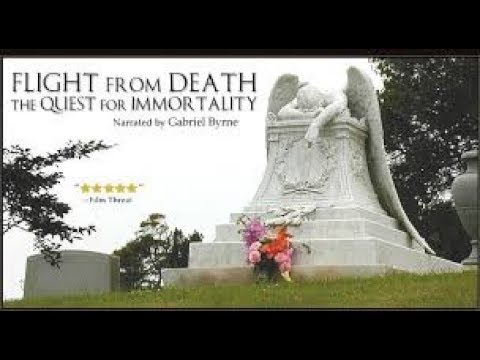
Flight from Death: The Quest for Immortality

Flight from Death: The Quest for Immortality

https://www.youtube.com/watch?v=eMla61cOMtc


Your Raw and Beautiful Heart


From the deep realization of our own basic goodness we develop a tenderness toward ourselves and others.

This then awakens our heart, an empty heart. "If you put your hand through your chest and feel for it, there is nothing but tenderness. You feel soft and sore, and if you open your eyes to the rest of the world, you feel tremendous sadness. This kind of Sadness does not come from being mistreated. You don't feel sad because someone insulted you or because you feel impoverished. Rather, this experience of sadness is unconditioned. It occurs because your heart is completely exposed. There is no skin or tissue covering it; it is pure, raw meat. Even if a mosquito lands on it, you feel so touched. Your experience is raw and tender and so personal.


"The genuine heart of sadness comes from feeling that your empty heart is full. You would like to spill your heart's blood, give your heart to others. For the warrior, this experience of sad and tender heart is what gives birth to fearlessness. Conventionally, being fearless means that you are not afraid or that, if someone hits you, you hit them back. However, we are not talking about that street-fighter level of fearlessness. Real fearlessness is the product of tenderness. It comes from letting the world touch your heart, your raw and beautiful heart. You are willing to open up, without resistance or shyness, and face the world. You are willing to share your heart with others." (Chogyam Trungpa, Shambhala: the Sacred Path of the Warrior. pp. 33, 34)


Beautiful People


"The most beautiful people we have known are those who have known defeat, known suffering, known struggle, known loss, and have found their way out of the depths. These persons have an appreciation, a sensitivity, and an understanding of life that fills them with compassion, gentleness, and a deep loving concern. Beautiful people do not just happen. They are made."
(Elizabeth Kubler Ross)


“A person is oppressed when they are held back, either physically or psychologically, from the goals they aspire to, and the norms of society … oppression is closely linked to devaluation and loss of power.” (Al Condeluci, in “Interdependence”, pg. 16)

“Our society is not set up to cope very well with people who are weaker or slower. More important, we are not skilled at listening to the wisdom of those whose life patterns are outside of the social norm.” (Jean Vanier, Becoming Human, p. 46)

”The human eye is always selecting what it wants to see and also evading what it does not want to see. The crucial question then is, What criteria do we use to decide what we like to see and to avoid seeing what we do not want to see? Many limited and negative lives issue directly from this narrowness of vision.” (John O’Donohue, Anam Cara, p. 62)


Saturday, September 12, 2020

Politics of Violence

Is Violence America's Addiction?

How Bad Do We Need Our Fix?

Can Violence can ever be the Answer?

Divide and Conquer has no place in a Democracy.


Violence always begets Violence in this world.


If an ideology is solid and really meant for the common good, then why would there need to be such division? Divide and conquer can never be used for the common good. By nature it is meant only for a common few to dominate.

In this world, we all have some sort of heartbreak. Dashed dreams, broken relationships, ideals trashed, and all forms of dishonor and disrespect. Even though we live in perhaps one of the greatest countries on earth, we are more divided than ever. And it seems to me that we are bent on expanding that breach to an unrepairable level.


"In choosing democracy, we must exhibit tolerance for ideas with which we disagree.  When we choose intolerance, we leave our democratic values behind, which is the real enemy of our Constitution. We must argue, debate and deliberate in good faith. And we must be willing to listen, learn and change our minds." (Intolerance, the real threat to our Democracy) 


Democracy requires dissent. Without opposing sides, we cannot see a broader and deeper perspective so that better decisions can be made. The reason this is so true collectively is that it is also just as true individually. We must learn to see both sides, listen to both sides, and do our best to seek understanding; knowing that no one is better than another person and that sides are nothing more than the stories we allow in our heads. We all have reasons for thinking the way we do. Our values and beliefs are anchored deep in our soul, so much so that they become a part of us. Our values and beliefs become our identity, whether we realize it or not. That’s why when someone disagrees with us, it feels like a personal attack. Because, in a way it is.


And yet, knowing full well that we feel attacked when someone opposes us, we turn around and intentionally attack them back. No longer is it inadvertent or unconscious. Suddenly our emotions flare up and we go at it using our best tactics of war that we have. We all have a very extensive box of war tools that if we proceed without conscience or empathy, can do a lot of damage. We go into a mode of operation that embraces a language of war. Anytime we think we are right, we must make others wrong if they disagree. Anytime we use labels and call names, we demean the other person so that we can gain the advantage. Anytime we dominate the “other”, we have made them the enemy that we become hell bent on destroying.