(My Philosophical Evolution) This version (2.0) is my inner work of systematic deconstruction, deconversion, uprooting, and dredging up a lifetime of deep-seated conditioning, ingrained beliefs, and embedded dogma, much of which has been unconscious;
discerning trash from treasures and thoughtfully reconstructing a world and life view that reflects the shape of my heart.
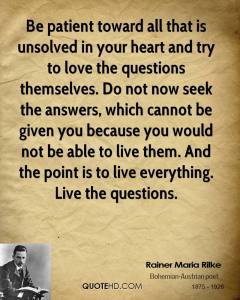
As I go deeper and beyond, answers fade into questions, certainty into uncertainty, knowing into unknowing.
John O’Donohue was an Irish poet and philosopher who lived in a small cottage in the West of Ireland. He wrote several books including Anam Cara: The Book of Celtic Wisdom and Eternal Echoes: Celtic Reflections on Our Yearning to Belong. John passed away on January 3, 2008. He was 52 years old. You can access his website to learn more about John and his work. www.johnodonohue.com
“When is the last time you had a great conversation? A conversation which wasn’t just two intersecting monologues, which is what passes for conversation in this culture. When have you had a great conversation in which: you overheard yourself saying things you never knew you knew; you heard yourself receiving from somebody words that absolutely found places within you that you had thought you had lost; you and your partner ascended to a different plane; memories of the exchange continued to sing in your mind for weeks afterward?” (John O’Donohue)
Learning to talk "with" each other again
What constitutes a great conversation?
Begin by talking WITH each other rather than talking TO each other.
Begin by listening. No one is interested in what I have to say unless I am first interested in what they have to say.
Begin with understanding. Seek to understand more than to be understood. Conversation is not about me, it is about us.
If a person says that my statement is judgmental, isn’t THAT being judgmental? Am I being judgmental by asking this question???
Why do we so often judge others and their ideas? What do we fear? Why do we need to set things straight right then and right there?
What is true anyway? Well, it depends on each person’s perspective. 10 people can see the same situation and come away with 10 different descriptions of that same situation.
Do I need to be right? Does truth need to be “defended”? Why?
Can it not stand on its own? Usually we “defend” the weak and vulnerable from being hurt or destroyed? Is that what we think about truth? Is it our duty to defend the truth? If we do not defend it, then it will melt away or become a victim of an overpowering idea?
What is the source of our constant argumentation? Why do we cut ourselves short of understanding another? What do we fear? Being wrong? Not being right? Being different? Being the same?
We spend our lives quibbling facts and disputing words without bothering to understand what it is we are disputing and quibbling about... or why.
Do we even want to understand another? Are we afraid of their difference? Are we afraid of our own ideas crumbling, or crashing down around us, or melting away?
Understanding requires the effort and the intention to understand.
Understanding requires the effort and the intention of listening.
Why is it so hard to listen?
We cannot listen
Over our chattering mind
Over our need to be right
If we are busy formulating our response
If we already think we know what the person is going to say
What is my Source? From what inner place am I living my life?
(Source of the River Cuervo, Cuenca Province, Spain)
”The best in art and life comes from a center – something urgent and powerful, an idea or emotion that insists on its being. From that insistence, a shape emerges and creates its structure out of passion. If you begin with a structure, you have to make up the passion, and that’s very hard to do.” (Roger Rosenblatt)
“The success of an intervention depends on the interior condition of the intervener.”
Two people can act or interact or react in the same way in similar situations BUT the results are never the same. Because what really matters is the interior condition, the motivation, the intention, the Source from which each person is acting. One person can say something to someone and they become outraged. Another person can say something very similar and they are comforted. It is not so much what we say or do or even how we say it or do it. What matters is why we say and do the things that we do.
What is the Source of my attention and of my intention?
My most basic intention of writing is to shine a spotlight of awareness on my blind spot; the place from which my attention and intention originates and emanates; my interior condition, my source. I need to remember this each and every day; because through lack of consciousness, lack of awareness, by default this is the human blind spot.
What we do and how we do what we do are small matters compared to our state of being, our presence, our mindfulness, that engulfs the why of what we do and how we do what we do. This is our Source.
“Thus it may be that, for a few moments, or hours, or even days, we can enter into the heart and head and body of another culture. We will always return to our own world, for that is where our roots lie. Nevertheless, on our reentry we may be changed in some subtle yet important way. And, sometimes when we spend time living within that other culture, we are able to look back upon our own world and see it through alien eyes, appreciate its limitations as well as its beauty and attraction.” (F. David Peate, Blackfoot Physics)
Since childhood, I’ve practiced this exercise. Stepping out of myself and looking back on this world as if I’d never seen it before. As a child, I thought it was just part of being rather “different” or weird in my outlook on life. Often I would lay on the ground, looking into the sky while placing myself in the shoes of some alien looking down, and imagine what is being seen from such a perspective. Now I see it as a gift . . . although not a “nice” or “easy” gift. Actually, sometimes this gift can feel like a curse.
Stepping outside and looking back in is something I’ve been compelled to do, not something I’ve chosen to do. It would be easier to settle into my culture, my environment, and only see what is right there in my face. It would be easier to not see things from a different perspective, and just accept “what is”. Stepping outside and looking back in brings forth the ugliness that is “normally” overlooked. AND it can also show forth the beauty that is often taken for granted.
Through alien eyes, what do I see?
I see a human race reduced to a rat race.
I see the human race as a destructive race; developing and using it’s best technology to kill its own.
I see the meaninglessness of our striving after the wind.
I see endless, thoughtless routine filling our lives with busyness.
I see the vanity of fashion and beauty.
I see lives lived with no thought of tomorrow, of others, of suffering, or of injustice.
I see lives lived only thinking of and caring for self.
Our Bubble of Sameness Our Echo Chamber Insulated and Isolated
Separated and Segregated
We are so quick to shy away from and avoid anything that is disruptive to our lifestyles, our values, our beliefs.
But there is no new learning, no change,
no growth, no new perspectives without disruption.
Without disruption of the status quo, we keep on
thinking and doing the same things over and over.
And yet we keep on talking to the same people,
having the same conversations,
thinking the same thoughts,
believing what we have been told,
following the same routines and habits.
Is that really what we want???
Why do we keep on doing things
that give us the same result that we do not want?
Will we ever dare to break out?
"Humanity has been sleeping -- and still sleeps -- lulled within the narrowly confining joys of its closed loves."
Pierre Teilhard de Chardin
Each year we live, layer after layer of conditioning creates a sort of cocoon where we see only what we are taught to see, hear only what we are listening for, the echo of our own voice; where we insulate and isolate ourselves from discomfort, insecurity, uncertainty, reality, truth, and the vulnerability of relationships as we sacrifice our own authenticity, identity, and integrity. After a while, we know nothing beyond our little cocoon. But that’s OK because it is safe and warm and predictable… and sleepy. We hang a sign on our cocoon, “Do Not Disturb!”
Meanwhile, “in the cocoon there is no idea of light at all, until we experience some longing for openness, some longing for something other than the smell of our own sweat.” (Chogyam Trungpa, Shambhala; the sacred path of the warrior)
The cocoon, by nature, can only be temporary, not a lifelong refuge. When we try to stay in the cocoon, it dries up and dies. In the cocoon, truth is rendered powerless and empty. Unknowingly, we bring our identity, our purpose, our religion into the cocoon with us. Layer on layer of conditioning dilutes and pollutes the vitality of compassion and peace, equality and integrity. True religion is buried with the spin of politics and commercialization of culture.
All we can hear is what we have been told.
All we hear is what we listen for.
All we hear is what we want to hear.
All we see is what is in our face in the dark.
All we see is what we are looking for.
All we see is what we want to see.
All we see is what is in our puny little world of our own making.
While disruption and growth destroys sameness, comfortableness, security, and certainty.
“When we hide from the world in this way, we feel secure. We may think that we have quieted our fear, but we are actually making ourselves numb with fear. We surround ourselves with our own familiar thoughts, so that nothing sharp or painful can touch us. We are so afraid of our fear that we deaden our hearts.” (Chogyam Trungpa, Shambhala; the sacred path of the warrior)
Is there a glimmer of light, a hint of fresh air, that might pique our curiosity?
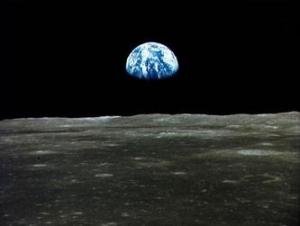
There is a whole universe out there; out beyond the walls of our puny little world.
There is a reality beyond our own making, maybe even a “God” beyond the one that we have created.
“To love at all is to be vulnerable. Love anything and your heart will certainly be wrung and possibly be broken. If you want to make sure of keeping it intact, you must give your heart to no one, not even to an animal. Wrap it carefully round with hobbies and little luxuries; avoid all entanglements; lock it up safe in the casket or coffin of your selfishness. But in that casket—safe, dark, motionless, airless—it will change. It will not be broken; it will become breakable, impenetrable, irredeemable.”
C. S. Lewis
Source: The Four Loves
Let's step out of the cocoon, the casket, the coffin, and stand up into the Light.
Why so afraid to stand up?
Someone will tell you, ‘sit down’.
But herein is the truth:
someone will always tell you to sit down.
The ones we remember
. . . kept standing.
(Ruth Forman)
In the book, Shambhala: The Sacred Path of the Warrior, warriorship is taught as a way of life. A warrior lives a life of fearlessness only if the person lives a life that is fully aware and fully present. The characteristic at the core of warriorship is gentleness; which comes from tenderness.
“Real fearlessness is the product of tenderness. It comes from letting the world (touch) your heart, your raw and beautiful heart. You are willing to open up, without resistance or shyness, and face the world. You are willing to share your heart with others.”
“In the Shambhala tradition, discovering fearlessness comes from working with the softness of the human heart.” “When a human being first gives birth to the tender heart of warriorship… you no longer need to feel shy or embarrassed about being gentle. In fact, your softness begins to become passionate. You would like to extend yourself to others and communicate with them. When tenderness evolves in that direction, then you can truly appreciate the world around you. Sense perceptions become very interesting things. You are so tender and open already that you cannot help opening yourself to what takes place all around you … You begin to feel comfortable being a gentle and decent person.”
We tend to beat ourselves up over our imperfections because we are culturally conditioned to do so. The nature of conditioning is that often we do not even know we are doing it. Conditioning sustains itself through its own invisibility.
We are human and we cannot change who we are. We can only accept ourselves as we are and move forward. Actually, accepting ourselves as we are is the first step to moving forward. If we do not fully accept ourselves, then we cannot accept others either.
‘Homo sum, humani nil a me alienum puto. I am a human being, nothing human can be alien to me.’ That’s one thing I’m learning.” ~ Maya Angelou
Our judgmental thinking is a constant and hard-wired into us. Thought has a mind of its own. We
must learn to pay attention to our thoughts and observe them. We are constantly making assumptions, judging, labeling, categorizing ourselves and others. Thought constantly is creating an image of ourselves and of others. Then thought tells us that this is the way the world really is, without reminding us that these stories in our heads are just that, stories in our heads. We are caught in a viscous cycle of thought creating the world and then saying, I didn’t do it. We are automatonic illusion machines with thought running away with reality, especially in the middle of the night.
So how do we begin? First we accept and love ourselves unconditionally. Then we guard our hearts by paying attention to our thoughts and the tricks they are playing. This requires time alone in silence. It is a discipline.
”The best in art and life comes from a center – something urgent and powerful, an idea or emotion that insists on its being. From that insistence, a shape emerges and creates its structure out of passion. If you begin with a structure, you have to make up the passion, and that’s very hard to do.” (Roger Rosenblatt)
“The success of an intervention depends on the interior condition of the intervener.”
THE BLIND SPOT
From what Source do our actions emerge? Most of us do not know…
THIS is our blind spot! Individually and collectively…
“The blind spot is the place from which our attention and intention originates. It is the place from which we operate when we do something.”
“We have never systematically looked at the leaders’ work from the blank canvas perspective. The question we have left unasked is: ‘What sources are leaders actually operating from?’
“I first began noticing this blind spot when talking with the late CEO of Hanover Insurance, Bill O’Brien. He told me that his greatest insight after years of conducting organizational learning projects and facilitating corporate change is that the success of an intervention depends on the interior condition of the intervener.
“That observation struck a chord. Bill helped me understand that what counts is not only what leaders do and how they do it but their ‘interior condition,’ the inner place from which they operate or the source from which all of their actions originate.
“Leonard Cohen said the song represented absolute surrender in a situation you cannot fix or dominate, that sometimes it means saying, ‘I don’t fucking know what’s going on, but it can still be beautiful.’” (Colin Frangicetto about the song Hallelujah)
Love is not a victory march
It’s a cold and it’s a broken Hallelujah
Hallelujah, Hallelujah
Hallelujah, Hallelujah
It’s not a cry you can hear at night
It’s not somebody who has seen the light
It’s a cold and it’s a broken Hallelujah
Hallelujah, Hallelujah
Hallelujah, Hallelujah
I did my best, it wasn’t much
I couldn’t feel, so I tried to touch
I’ve told the truth, I didn’t come to fool you
And even though it all went wrong
I’ll stand before the Lord of Song
With nothing on my tongue but Hallelujah
Hallelujah, Hallelujah
Hallelujah, Hallelujah
(lyrics from Leonard Cohen’s song, Hallelujah)
For 13 years, I’ve been writing the deepest thoughts of my heart, trying to find a voice for what was making less and less sense. I’m finding that the deeper I go, the more honest I become, the more clarity I seek; the more words escape me, the harder it is to write. I feel sort of like Cohen when he said about writing the song Hallelujah that during the five years it took to write the song, he found himself on his knees on the floor beating his head against the floor crying, “I can never finish this song!”
I think that “sense-making” is our way of polishing and domesticating what we are given. We have been conditioned to think that things are only useful to us if we can make sense of them. So rather than immersing ourselves into the struggle, into the pain, into the shadows, the darkness, the realities of life; we pull back, we protect ourselves from the discomfort of life’s realities, and we pretend to “make sense” of things. We whitewash the broken fences of our lives. And we turn from that which does not give us comfort and security and certainty; our gods of the age.
In the Spirit of Ubuntu umuntu ngumuntu ngabantu: a person is a person through other persons
I am . . . because we are
”What every single human being longs for, at the deepest level, is to be seen for who they are.” (Sarita Chawla)
“The Quaker teacher Douglas Steele was fond of saying that the ancient human question ‘Who am I?’ leads inevitably to the equally important question ‘Whose am I?’ – for there is no selfhood outside of relationship.” (Parker Palmer, Let Your Life Speak)
“Everybody is half-dead. Everybody avoids everybody, all over the place, in most situations, most all the time. I know; I’m one of those ‘everybodys.’ And, to me, it’s terrible. And so all I’m trying to do, all the time, is just open people up so they…let themselves be open to somebody else. That is all. That’s it.” -Nina Simone
“Neighbors, coworkers, and even family members can live side by side for years without learning much about each other’s lives. As a result, we lose something of great value, for the more we know about another’s story, the harder it is to hate or harm that person.” (Parker Palmer, A Hidden Wholeness, p. 123)
"Each of us creates a picture of our world by connecting a dozen or so of the trillions of dots that would need to be connected to make a 'true' portrait of the universe." -- Sam Keen
People that have the answers may not be facing reality in their own lives. Having the answers allows us to turn away from ourselves and others, put on the façade of certainty, and walk away. Certainty is a comfortable thing; sort of a god to many people. But considering the puniness of the human mind, the sliver of human knowledge, the tiny grains of wisdom, our answers are dust in the wind.
Considering the vastness of the universe, the billions of galaxies, the eternity of time, the complexity of our puny minds . . . and we think we know? We think we have the answers? We are quick to speak and slow to listen (slow to learn). And we think we know? Not only know, but know for sure???
“Train a child in the way he should go, and when he is old he will not depart from it.” Proverbs 22:6.
This is usually quoted as a command or an admonition telling us how to raise our children. But the context of this proverb shines a different light. The whole chapter is a list of statements of reality,
warnings of how life works.
For example, the next proverb says that the rich rule the poor and the borrower is slave to the lender. This is not telling us that the rich SHOULD rule over the poor or that the lender SHOULD become the master of the borrower. This is simply a statement of fact, the way of life, and a warning of how life works.
An ancient Jewish scientist, philosopher, and Rabbi, Ralbag, suggested an alternative, satirical interpretation of this proverb:
“Train a child in the way of evil and when he is old, he will not depart from it.”
My paraphrase based on this interpretation is “Beware of this: the way you raise your child is what that child will grow up to be.” Remember that your most powerful way of teaching is you; your words and your actions (role modeling).
CELEBRATE!!! Every word and thought, every opinion and belief, every perspective and
understanding is filtered through a lifetime of personal experiences. That's why each person's viewpoint is so completely different from others. Diversity is embedded deep in our bones. Diversity is not only external but internal. CELEBRATE!!!
EXTERNAL DIVERSITY (visible like race, ethnicity, age, physical disabilities, sexual orientation...) and INTERNAL DIVERSITY (invisible like values, beliefs, perspectives, hidden disabilities, sexual identity...)
No two people see things the same. Diverse perspectives are as common as the air we breathe; essential and inevitable and permeating all aspects of the life that we share.
“Transience is the force of time that makes a ghost of every experience. There was never a dawn, regardless how beautiful or promising, that did not grow into a noontime. There was never a noon that did not fall into afternoon. There was never an afternoon that did not fade toward evening. There never was a day yet that did not get buried in the graveyard of the night. In this way transience makes a ghost out of everything that happens to us.”
— John O’Donohue (Anam Cara: A Book of Celtic Wisdom)
We build our lives around permanency. Retirement savings is assumed to be permanent security. Homes and families are built on the human construct of permanency. Careers, income, and possessions . . . all create a sense of permanency.
I wonder why that is? We know that nothing is permanent. We trick ourselves into believing that stuff is permanent. But down deep we know it is not. We’ve seen it.
Everywhere, everything is dying. Flowers, grass, people, skin … everything is dying and making way for new life. New life is only possible if things are in constant flux, constantly changing, dying. New creation and new life come from chaos and death. This is the way the world is designed.
“Perhaps the whole root of our trouble, the human trouble, is that we will sacrifice all the beauty of our lives, will imprison ourselves in totems, taboos, crosses, blood sacrifices, steeples, mosques, races, armies, flags, nations, in order to deny the fact of death, which is the only fact we have.” — James Baldwin
Saint Benedict said, “Daily keep your death before your eyes.”
It is better to go to a house of mourning than to go to a house of feasting, for death is the destiny of every man; the living should take this to heart. (Ecclesiastes 7:2)
In the face of death, the straw man burns. When I realize that “no one gets out of here alive”, not even me, it makes me stop and wonder, really question, what am I doing, who am I, and what am I leaving behind . . . because no matter what, I am leaving. Nothing is permanent, including me. Nothing. So why do I cling so tightly to social status, to possessions, to money, to my home, to my family, to my life??? And on a level deeper yet, why do I cling so tightly to my loves, my desires, my abilities, my strengths, my gifts… for nothing is permanent… it all fades away.
Do I fear death so much that it makes me shun silence in this life? From silence I came. To silence I will return. But while I’m here, I make noise as much and as continuously as I can. I stay busy, I keep moving . . . Smell the roses? What roses? Take time? I don’t have time. I have to get here, get there; “too many people to see, too many places to go, too many ways to get there” (Lyrics by Bill Cooper).
Do I fear silence because it brings me face to face with reality, with me, with my end, and the silence thereof?
Why do I fight? Why do I fight what is inevitable? Why do I fear what is inevitable? I don’t fight the air that I breathe. I don’t fight the sunshine. I don’t fight the wind passing through my hair. Why do I fight the great circle of life as the old things pass away to make way for the new?
Why linger when there is no longer a reason for life?
Let go and let come.
That is the key to all of life.
Let go and let come. Befriend all of life.
Embrace the darkness so that I can fully appreciate the light.
Embrace the cold so that I can fully appreciate the warmth.
Embrace death so that I can fully appreciate life. “The living should take this to heart” while we can.
“An awareness of death is an ally for infusing our lives with a sense of immediacy, perspective, and proportion. In acknowledging the reality of death, we can more fully appreciate our gift of life.” (p. 121, Voluntary Simplicity, Duane Elgin)
IMMEDIACY: Making death an ally makes me realize that what I say is not as important as what is seen in my life. I must join soul and role, words and actions.
PROPORTION: I don’t need the lion’s share, I only need my daily bread. I’m not the center of the universe, I’m a grain of sand on the beach of the universe. It is not about me.
PERSPECTIVE: It is not about accomplishing things, it is about being. What I accomplish in this life is a chasing after the wind. Who am I? Who am I really?
“We need but look into the cemetery and see the ten thousand upturned faces; ten thousand breathless bosoms. There was a time when fire flashed through those vacant orbs; when warm ambitions, hopes, joys, and the loving life pushed in those bosoms. Dreams of fame and power once haunted those empty skulls . . .. Approach the tomb of the proud man; see the haughty countenance dreadfully disfigured, and the tongue that spoke the most lofty things condemned to eternal silence . . .. Behold the consequences of intemperance in the tomb of the glutton; see his appetite now fully satiated, his senses destroyed and his bones scattered” (p. 590 of the book, The Royal Path of Life, 1877 as quoted by Duane Elgin in Voluntary Simplicity).
https://youtu.be/eog8csgE1N4
“We do not need to grieve for the dead. Why should we grieve for them? They are now in a place where there is no more shadow, darkness, loneliness, isolation, or pain. They are home.”
— John O’Donohue (Anam Cara: A Book of Celtic Wisdom)
When O'Donohue says "home" I see this as referring to being where we belong, where we all go after death in a very inclusive and humanistic way; probably joining the rest of nature in the dirt, or fire and ashes, without any consciousness or awareness. But, who knows, maybe somewhere that death takes us as so many of our human myths say. Who knows? Who cares? What will be... will be. What is... is.
Let's face the monster in the closet and see that the closet is only a closet and stop creating monsters to be afraid of in death so that death can be a part of the circle of life, nothing more, nothing less.
Conquering this monster illusion in death also shatters our facade in life. We hide because we fear that which we do not understand; the unknown, the different, etc. Living without fear, without hiding, is very freeing. It lets us live lives that are real, natural, and human.